
In partnership with

Welcome to the Skeptical Investor Newsletter. A frank, hopefully insightful, dive into real estate and financial markets. From one real estate investor to another.
Today’s Interest Rate: 6.41%
(☝️.27% from this time last week, 30-yr mortgage)
This week, we’re talkin’ a quick take on how the global oil panic may be over, and I have a spicy hot take: it is NOT possible to build new affordable housing.
Let’s get into it.
The Weekly 3 in News:
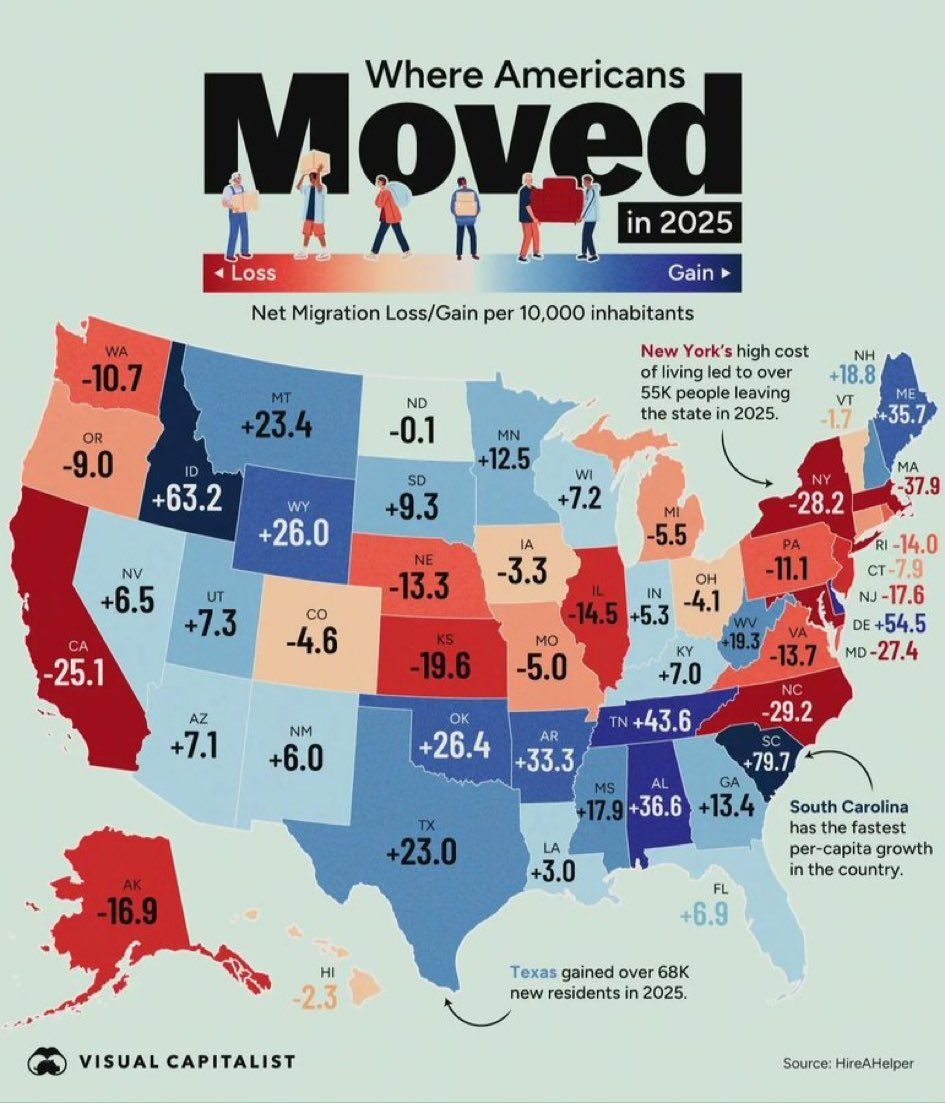
Where are Americans Moving? South Carolina, Idaho, Delaware, Tennessee, and Alabama (HireAHelper).
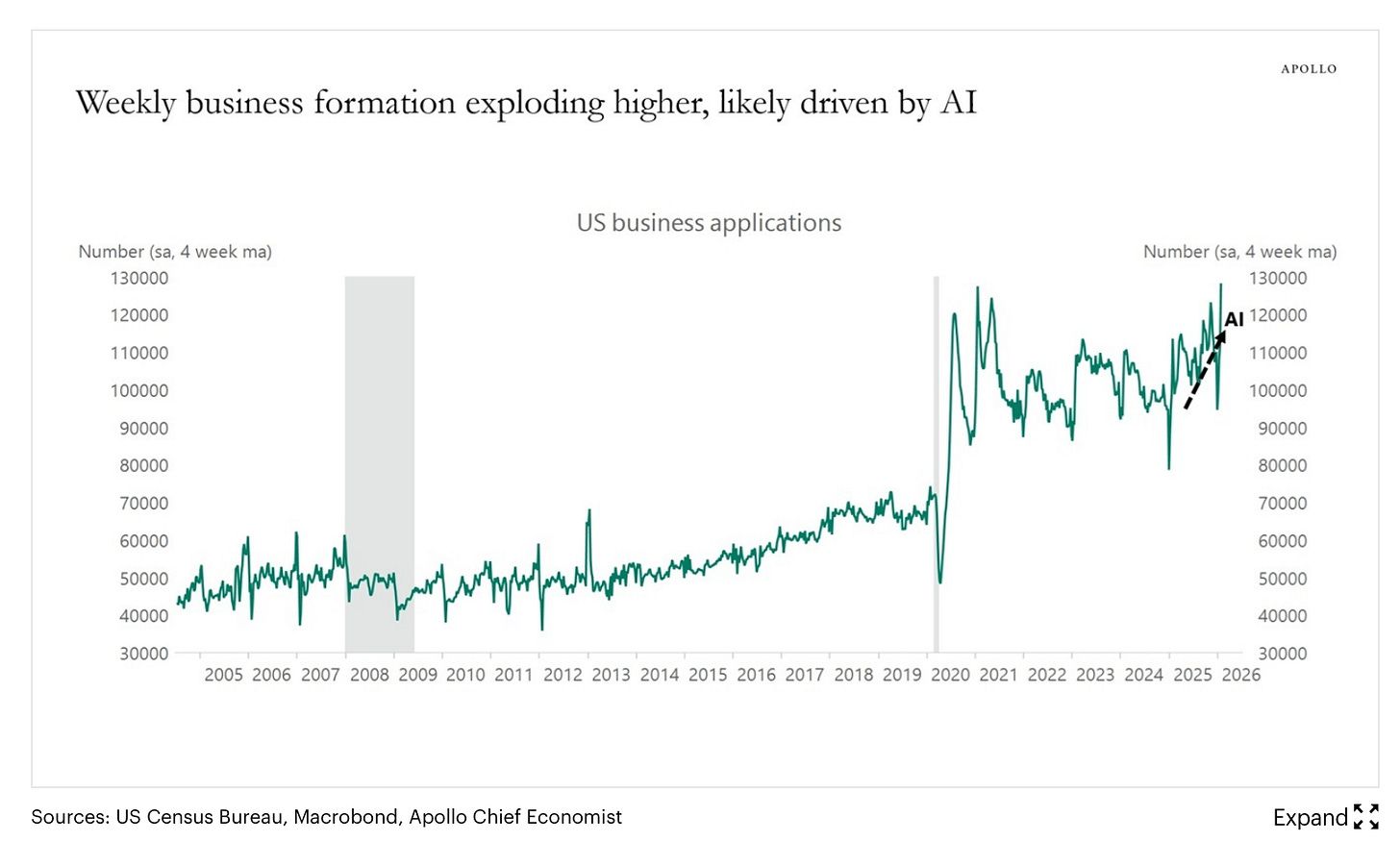
New Business Formation Exploding Higher! AI is making it easier than ever to start your own business (Apollo).
Nashville News — Plans rumored for Nashville’s largest skyscraper construction, south of Downtown / Broadway, a 53-story hotel and residences by Chicago’s DAC Development (Nashville Post).


The Global Oil Panic May Be Over
On Saturday, the President sent out a message - and reiterated during a rally - that the conflict with Iran may have come to an end.

It appears the Administration is taking the ‘win,’ having halted nuclear and ballistic missile production and decimated the military capabilities of Iran, per the White House. Iran has been behind pretty much all ‘mischief’ throughout the Middle East for decades.
The US may now step back into a supporting role and focus on the restarting of the global oil trade.
And this may in fact be the case.
Iran Allowing The Straight to Open
Late last week, Iran put out public statements saying they would allow free passage of all commercial ships through the Straight of Hormuz bottleneck, except for those bound for US or Israel.
Wow.
Well, if this is true, the Straight is effectively open for business.
Almost all oil tanker traffic from the Gulf through the Straight is destined for China and Asia.

Global seafaring oil traffic could be back to normal in a few weeks.
And why is this Straight so difficult to navigate?
It’s a teeny bottleneck that bifurcates tremendous oil production in the Persian Gulf to the Arabian Sea.

If I were a betting man (I am), I would think the Saudis build another oil pipeline from the Gulf to the Red Sea to pivot away from troublesome Iran.
Case in point, the Saudis have maxed out, increasing by 700%, the throughput of the current East-West pipeline, known as Petroline, which stretches 1,200 km from the Abqaiq oil processing facility near the Persian Gulf coast to the port of Yanbu on the Red Sea.
“Before the war, this pipeline carried roughly 1 million barrels/day east‑to‑west. Saudi officials now say they are only a few days away from ramping throughput to capacity of about 7 million barrels/day. Tankers are lining up in the Red Sea to lift these redirected cargos (BiancoResearch).”

This, combined with the free flow of oil headed for Asia through the Straight, means the global oil panic may be over.
Skeptical Investor Takeaway - if correct, inflation projections/worries should plummet this and next week, once ships start actually moving. This will bring a sharp positive correction up in treasuries, dropping interest rates on the 10-yr Treasury and, thus, mortgage rates. It will also quell worries about pernicious inflation seeping into the manufacturing costs of, well, everything, since we still very much rely on oil/gas to power manufacturing and heavy vehicles everywhere.
Hot Take: The inflation worry from oil trade disruption was likely the main catalyzing factor to (hopefully) ending the conflict, showing that the invisible hand of Mr. Market and capitalism is and can be the most powerful incentive for good. As the late great Charlie Munger said, “Show me the incentive and I’ll show you the outcome.”
Bullish.
The Year-End Moves No One’s Watching

Markets don’t wait — and year-end waits even less.
In the final stretch, money rotates, funds window-dress, tax-loss selling meets bottom-fishing, and “Santa Rally” chatter turns into real tape. Most people notice after the move.
Elite Trade Club is your morning shortcut: a curated selection of the setups that still matter this year — the headlines that move stocks, catalysts on deck, and where smart money is positioning before New Year’s. One read. Five minutes. Actionable clarity.
If you want to start 2026 from a stronger spot, finish 2025 prepared. Join 200K+ traders who open our premarket briefing, place their plan, and let the open come to them.
By joining, you’ll receive Elite Trade Club emails and select partner insights. See Privacy Policy.
Here’s a hot take that’s going to get a few of you tilted…
It’s NOT Possible to Build ‘Affordable Housing.’
Let me say that again.
It is NOT possible to build affordable housing.
Tilted yet? That statement make you a little…perturbed?
Calm down, let me explain.
Now, first and foremost, yes, I acknowledge it is technically possible to build new housing units that are “affordable,” meaning those at the poverty level can afford to pay the rent.
BUT. This is a lie.
“Affordable housing” through new construction always requires some form of subsidy or tax incentive to make projects financially feasible for developers to build.
Remember: Governments don’t really build or operate housing (at scale) in the U.S.
It sets the rules, provides incentives, and creates the regulatory environment that enables (or hinders) the private sector.
Private developers and investors step in to do the actual work: acquiring land, navigating entitlements, financing construction, managing development risks, and operating the asset long-term. For any project to move forward, it has to generate sufficient returns to cover all those costs—including paying employees, covering materials/labor/taxes/fees (many of which flow back to government), servicing debt, and delivering an attractive risk-adjusted return to the equity investors who provided the capital in the first place.
Without the prospect of profitability, capital simply won’t flow—projects don’t get built, jobs aren’t created, and housing supply doesn’t increase. This is why thoughtful policy (zoning reform, streamlined approvals, + targeted subsidies like low-income tax credit or tax abatements) is so critical: it incentivizes and bridges viability gaps so developers can profitably produce more units, including those that become naturally affordable over time.
Again, show me the incentive, and I’ll show you the outcome.
What if the government didn’t subsidize/use taxpayer money to fund "‘affordable housing?’
It wouldn’t be built. Not directly.
Pure market-rate new multifamily development today rarely “pencils out” at affordable rent levels without subsidies. And, ironically, much of the reason is regulatory policy and cost.
According to the National Association of Homebuilders
Studies show that regulations imposed by government (mostly state/local) account for nearly 25% of the price of building a single-family home and more than 40% of the cost of a typical multifamily development (aka why the rent be so damn high) (NAHB).
Quick Ad Break….RentRedi
Ready to Take Your Property Management to the Next Level?
Enter RentRedi. Built by landlords, for landlords
Inspired by people like you, RentRedi makes managing properties smarter, simpler, and more human. Many members of our team also own and manage rental properties.

Plus, Skeptical Investor readers get $100 off. Click this referral link and test drive today!
Want to advertise to the more than 50,000+ weekly readers of The Skeptical Investor? You can! Advertise with us; we can help you grow your business. Reach out.
Ok, back to business.
The Reality of New Construction and Affordable Housing
It’s fundamentally illogical to expect the newest, most expensive (and yet most efficient way per unit to build housing)— aka newly built multifamily apartments—to serve as the primary source of affordable or workforce housing.
Construction costs have risen steadily over decades, driven by inflation in materials, labor, land, entitlements, and financing. What was “luxury” in the 1980s is often naturally affordable today, but brand-new projects start at a premium.
Consider this example from Developer John Otter: “[In 1983, as a TCR partner, I developed my first apartment project in Orlando at an all-in cost of about $36,000 per unit. At the time, it was one of the top-tier luxury communities in the area (alongside another I built in Altamonte Springs), commanding top-of-market rents. Fast-forward to today: Recent checks show that same property—after natural aging and a recent refresh—rents several hundred dollars below Orlando’s current average, making it a classic case of “naturally occurring affordable/workforce housing].”
Analysts track similar housing economics, including both market-rate and government-subsidized affordable housing projects (aka Low-Income Housing Tax Credit - LIHTC).
The numbers don’t lie.
No developer has been able to crack the “secret” of offering a product that makes money, and thus, they would be incentivized to spend thousands of hours of their time, and millions of their and investors’ dollars to do so.
No combination of code reforms, value engineering, or construction efficiencies closes the gap enough to make a new multifamily project pencil at truly affordable levels without subsidies.
Add to this, even with subsidies, affordable housing projects, which provide bare-bones livability standards, remain infeasible without the equity from federal tax credits, which is precisely why the 1986 LIHTC program exists—to bridge the gap for private developers serving low-income households.
This was and is an appropriate use of taxpayer money.
Regulatory Reform is Still Necessary
Now, all this being said, we can stop the insane growth in housing costs. Both as reflected in rents and in single-family home costs.
Streamlining permitting, reducing impact fees, and easing zoning can lower costs and boost overall supply.
Every dollar saved helps.
But the savings aren’t transformative enough to eliminate the need for subsidies in affordable/workforce segments—current U.S. multifamily construction averages roughly $200,000–$350,000+ per unit (depending on location, height, and amenities), far above what lower rents can support without incentives (Otter).
This is also much higher than existing, aged housing stock.
Anecodte: I’m buying a 1960s vintage 20-unit building here in Tennessee, with an average cost per unit cost of ~$80k. These are basic C-class units in a B-class area of town. This price is far below replacement value/cost. Rents here, even in my renovated units, will be affordable for the below-average income earner (1beds at $900-$1100 - 2beds at $1250-$1500).
THIS is affordable housing.
In fact, saying “build affordable housing” is a lot like saying “build used cars” (I stole this quote from @atlanticesque, I couldn’t have said it better myself).
Let me explain.
The Path to Actual Housing Affordability: Massive, Sustained Supply Growth
The real solution lies in increasing overall housing supply.
Dramatically increasing.
Then, allowing units to age naturally, like the opposite of a fine wine. New construction today (even if basic) is the most expensive housing stock, so it serves higher-income renters initially. Over 10–20–30 years, as properties depreciate and compete, they become more affordable—exactly what happened with 1980s and 1990s builds that are renting out today.
Cities and states that have consistently permitted and built large volumes of multifamily housing decade after decade (e.g., parts of Texas like Austin, Nashville, Charlotte, Salt Lake etc…which lead in efficient production and have seen more responsive supply growth) end up with better options across income levels—except perhaps the very lowest—without heavy ongoing subsidies.

In contrast, places like many Californian and East Coast cities, which sharply curtailed apartment construction starting in the 1980s through restrictive zoning and slow permitting, now face severe shortages: limited workforce/affordable options, sky-high rents, and a multi-million-unit deficit that has worsened over decades.
We can’t retroactively build the housing that should have been added in the ‘80s, ‘90s, and 2000s. But we can avoid repeating those mistakes today.
Rental housing built now won’t immediately serve all income levels without subsidies—because it’s the priciest stock.
But if we build substantially more today, it will become increasingly affordable in the coming decades, just as past waves did.
Without aggressive new supply now, affordability in constrained markets (like much of California) in 2035, 2045, and beyond will be far worse than today’s already dire situation.
For investors: Focus on markets with pro-growth policies, where subsidies or abatements can de-risk affordable/workforce deals, and where overall supply growth supports long-term filtering and value appreciation. For policymakers: Prioritize zoning/upzoning reforms, faster approvals, and targeted incentives to unlock more units—because the alternative is perpetuating shortages that hurt residents and economies alike.
The data and history are clear: Subsidies are often necessary for an immediate influx in affordability at the lower end, but the only sustainable path to broad, unsubsidized affordability is building far more housing overall—starting now.
And remember, subsidies make the economics of housing fake; there is always a very real tax on all of us for building these housing units when the government spends your tax money in the form of a subsidy/tax incentive.
(Big credit to John Otter for sparking my thoughts and for the data on this piece).
My Skeptical Take:
Build. More. Housing. Units.
Is it possible to build affordable housing?
Not really.
There’s no easy button to solve affordable housing in the short term, at scale.
The solution, that exists, will result from maintaining a pro-supply housing environment for decades.
In fact, ‘affordability’ is a side effect/feature of a pro-housing development environment, executed over time.
Again, to borrow a fantastic comparison I read this week: “build affordable housing” is like saying “build used cars.”
So true.
And, think of this.
What we built NO new cars and had only oldcars?
Well all cars would become uber-expensive to buy and operate.
And we would be Cuba, with 1950s cars still rolling around today.
A final Note: This Week’s Housing Executive Order
The Executive Order the President signed, while directionally correct, is not enough.
Why?
It has no teeth. No stick.
And I would offer, that we will only know the government is serious about housing costs once they give teeth to all the talk and withhold federal funding to states that do not implement housing regulation reform at the state AND local level.
Until then, in this world, nothing can be said to be certain, except death, taxes and higher housing costs.
Plan accordingly.
Until next time. Stay Curious. Stay Skeptical.
Herzliche Grüße,
P.S. Want to level up your real estate game?
You can consult with me, The Skeptical Investor! Get professional advice from someone who actually owns, operates, and brokers real estate.
Want to Grow? - Get clarity on how to grow your business or scale.
Stuck? - Get answers to your problem, let's hop on the phone and figure it out.
No "guru" trying to sell you an expensive course. No BS. No fluff. Only results.
I'll give you my frank, brutally honest advice. Book a call with me today.
It’s 2026. Be an owner.
Please Share this Article!
We have passed 50,000 subs! Thank you for your support, next stop, 60,000!
Please help grow the community!
It takes me several hours to write this weekly article, and they will always remain free (but you get some pretty cool perks with premium, including a one-on-one with yours truly :). All I ask is that you share it with 1 friend. Just 1. If you do, you will get two gifts: free education for one of your friends, and good karma for helping to grow a community of folks trying to figure out a way to create wealth for their family.
What, did you want, a cookie? 😅
Subscribe Today! (and get some amazing perks)
Paid subscribers get the best stuff! Join the Skeptical Investor Community to access:
Premium content and NO paywall,
Every article we have published - a treasure trove of information and education,
Conversations with other investors in the Skeptical Investor community, and future meetups and special events,
Key insights and predictions on the latest financial news,
PLUS, subscriptions include an annual one-on-one call with me personally. So make sure to take advantage! Subscribe today.
Just $5 bucks a month.👇
Ready to Start Investing in Real Estate? Know someone who does?
We are real estate agents for investors, because we are investors. We specialize in helping investors find, analyze and negotiate great real estate deals, as well as manage their rental properties, here in Nashville, TN. We pride ourselves on being tough negotiators. We want our clients to get an amazing deal, we never let our clients pay retail.
Enjoying this newsletter? Know somebody looking to buy real estate? Send them to the best in the business, THE Nashville Investor Agent! Referring real estate business helps us keep the lights on and me keep pushing out fresh real estate analysis each and every week. Help peep this newsletter going for all you awesome folks out there; refer someone to us when you may hear they are in need. We promise to take great care of them and make sure they get a fantastic deal. They will thank you for it.
If you or someone you know are looking for an investment property, give us a call today!
You can also find out more about us and what we offer on our website: www.NashvilleInvestorAgent.com
Why Nashville? There is always a bull market somewhere, and one of them is Nashville. We have the lowest unemployment rate of the top 25 major cities and folks are moving here to take those jobs. Nearly 90+ people per day move to Nashville. And tourism continues to hit record levels. This past year 16.8 million folks visited our lively city. Plus we have 3 professional sports teams (hopefully a 4th soon), massive healthcare and entertainment industries, heavy manufacturing, more than a dozen colleges, no state income tax… to name a few amazing advantages. Come check us out, the water is warm :).