
In partnership with

Welcome to the Skeptical Investor Newsletter. A frank, hopefully insightful, dive into real estate and financial markets. From one real estate investor to another.
Today’s Interest Rate: 6.39%
(👇.06% from this time last week, 30-yr mortgage)
This week, we’re talkin’ Straight of Hormuz, Iran talks…just kidding!
We’re gettin’ back on the wagon and talking about what real estate folks need to know: How and what to renovate.
Are you a landlord? I share my top 10 most profitable renovations you should be doing in all your rentals. And what mistakes to avoid.
And now for something completely different.
Let’s get into it.
The Weekly 3 in News:
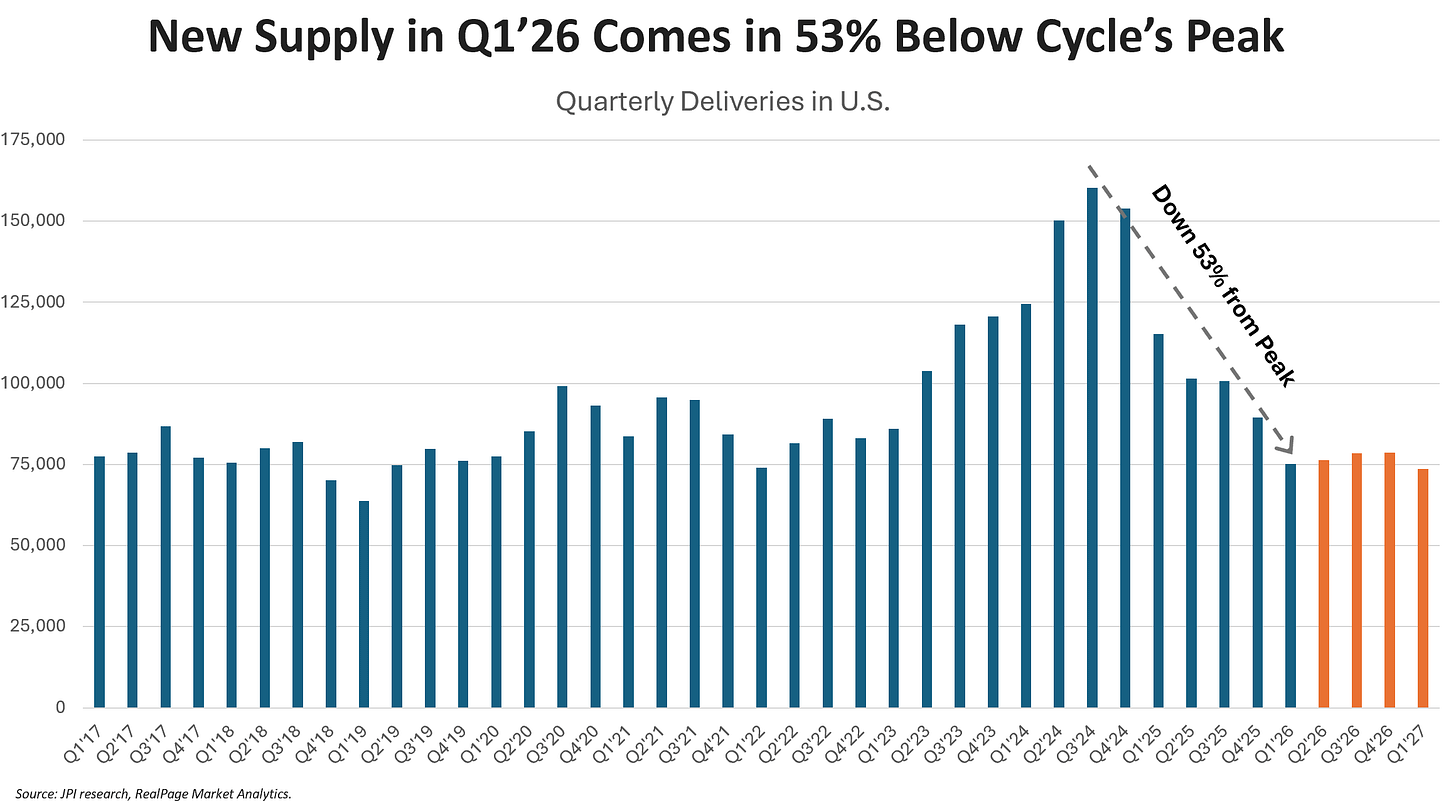
Housing supply is in the rear-view mirror, as rental prices restart their upward climb. Completions in Q1'26 came in at one of the lowest levels in 7+ years, and will likely hover around these levels for a while -- ending the largest supply wave in a half-century (Parsons).
Consumer spending is up and beating expectations, up 3.6%, the strongest growth rate in more than 3 years (CNBC).
Japanese investors make massive bets on the US housing market. Japanese home builders are now set to own about 6% of the U.S. home-construction market, accelerating their U.S. investments (WSJ).

Assets Feed You
Investing is different than other moneymaking activities.
When we commit a dollar to an investment, that greenback transmutes into a little worker bee, laboring on our behalf to make you honey. When we’re at work, at the park, with our kids, on vacation, and even while we’re asleep.
Otherwise, kept in a “savings” account, dollars decay, as the rust of inflation slowly consumes them.
A bee’s lifespan is ~6 weeks.
And so will your dollars be…if you don’t give them a job.
So, we need to put those little bees to work!
Allocation is Key
But it’s not enough just to have them do any old thing. Investor success depends on how and to what we direct them to do, aka how we allocate scarce resources to turn a profit.
This is an investor’s #1, and really only, job.
This allocation and return define an asset. And if we aren’t getting more than $1 back on each worker we deploy, well, we screwed up.
Because if it doesn’t make money, there’s another word for that.
Liability.
Assets feed you. Assets give you cash flow. Liabilities don’t.
Some people can’t tell the difference between an asset and a hole in the ground.
Hard Truth: your home is not an asset; it’s a liability.
The Key to This $240B Market Is in Your Bloodstream

Every year, $240B is spent on treating the symptoms of osteoarthritis. But not a single therapy has been able to actually stop it. The answer, it turns out, has been inside us all along.
A startup named Cytonics discovered the human body already produces a protein designed to protect cartilage. It just doesn’t produce enough where it's needed most. So Cytonics harnessed it.
Their first-generation therapy has already treated 10,000+ patients. Now they've engineered a 200% more potent, mass-producible version pushing toward FDA approval.
If approved, it could be the first therapy to actually halt cartilage destruction and promote regrowth in a market that has never had a real solution. Claim a piece at the pre-clinical stage as an early-stage investor before March 26 to receive time-sensitive investor bonuses.
This is a paid advertisement for Cytonics Regulation CF offering. Please read the offering circular at https://cytonics.com/
It’s the bank’s asset. Don’t believe me? Take a look at their balance sheet.
Said another way, your spending/mortgage is their income.
In real estate, you have to start landlording to be an investor.
And it’s not just the cash flow.
There are 5 Ways investors make money in real estate:
Cash Flow
Forced Appreciation (add value)
Principal Paydown (of mortgage, by your tenants)
Tax Depreciation
Natural Market Appreciation
Investors can actually control each of these 5 levers of income, much like the volume on your stereo.
How?
You Have to Renovate
You MUST add value to real estate to be successful and make money in real estate.
I can already hear the emails I’ll be getting over this, but it’s true.
Turnkey properties don’t make money. You are paying a premium for an asset built by someone else’s worker bees.
You might as well just keep your money in the stock market, buy the Vanguard 500 Index VOO, make your 8%, and do something else.
Investors’ superpower is their judgment. The choices they make as they deploy their worker bees is how they generate alpha.
And every bee should be focused on one thing: adding value for your tenants. Put them first. And if you truly do so, they will be easy to find, will stay longer, and will be happy to pay for it.
Of course, you can overbuild, so worker bee allocation is key key key. No gold bathtubs, people.
Whew… ok that was a lot I know.
So with that, let’s dive in with some real-life examples.
This is my top 10 value-add renovations all investors should be doing in their rentals to maximize earnings and tenant happiness. And what mistakes to avoid, (cause I’ve made them all already for you).
My Top 10 Rental Renovations
First is painting and landscaping. Yes, above all else, even above kitchens/bathrooms, these two areas carry the highest honey return.
Next, kitchens & bathrooms. This is likely where the largest % of your bee budget should be allocated to maximize your returns. But your really choices matter. Here are a few high-value return ideas that I love to do (with actual pictures).
Cabinets
It’s OK to rip out the cabinets.
Yes, yes, ideally you can just slap a fresh coat of paint on them, update the hardware, and call it a day. Or just replace the door fronts. But that normally just doesn’t look good enough.
What I like to do is rip out all the upper cabinets and replace them with open shelving. Doing this will cut your cabinet budget in HALF. Now you can do new lowers and still be under budget for the kitchen. And always go for real wood cabinets, you need to harden everything to reduce lifetime repair costs.
Here is a totally new kitchen. I only needed 3 cabinets total.
Go ahead; count ‘em.

Pro Tip: Make certain your contractor puts a heavy bracket / lag into the stud when hanging those shelves. Your tenants won’t hesitate to put 100lbs of plates, bowls, and glasses on them, which could be a disaster.
Appliances
Unless you really can’t fit them, do full-sized appliances. This goes extra for refrigerators and washer/dryers. Tenants do appreciate it, and you will have far fewer “my clothes aren’t drying” complaints.
Don’t get a fridge with an external icemaker in the door. They break all the time. An icemaker in the lower freezer drawer is ok.
Don’t buy anything Samsung. They suck.
Keep existing old / “ugly” washer dryers. You do not need to replace them. Old washer/dryers were built better, I hate to say. Hell, my personal home has a 30-year-old set that works better than anything new I’ve put in.
Don’t pay for appliance repair. Unless it’s a simple fix, the problem with appliances is that repairing them is just not worth it, and many repair companies are frankly predatory with their labor and part markup. If it’s not an easy fix, just replace it. They’ll haul the old one and recycle it for ya so you don’t feel bad.
Counterpoint Anecdote: Tenant called, a new oven was throwing up an error code and would not heat up. I looked it up, and it likely needed a new circuit board. Appliance repair guys (I called 3) quoted me $600-$800 to fix. The stove cost $900. Normally, I would just replace it, but the rental is right around the corner from my place. So I looked up the part, it was ~$100 bucks and a quick YouTube search made the install look easy. It was. Took me 30 minutes. So sometimes, it may be worth looking up.
Protip: Find the scratch and dent store near you. Every city has one, this is where Home Depot and Lowes dump their dinged product. They are new, and as long as the ding is not too serious (always check), they are new and perfect for your rental. This also allows you to go stainless and keep within budget.
Counters
Go for quartz. It’s zero-maintenance and robust as a brick shithouse. Don’t do anything glittery or weird. A Carrera marble look-alike is a good choice; there are 1000s of variations. Fun fact, while it is stone, it’s also a man-made product.

Add a Kitchen Bar
Only when you have an existing window, consider converting it into a larger one that opens, then continue the kitchen countertop to the outside.
Here, there was already an old 60’s double window. Easy conversion. A new window that you lift up, a chain + and a little extra counter stone. Don’t get too cute.

Storage and Landing Zones
Even, and especially, if we are talking about a small apartment it, many chronically lack storage. Add a dedicated “landing zone” near the entry for shoes, coats, bags, and keys, plus generous open shelving in the bathroom adjacent to an oversized closet. These small details solve daily clutter problems. When prospective tenants tour multiple properties in one day, they remember the unit that functions best.

Old Windows = New Doors
If access is needed, I do French doors in place of old windows. No, don’t even think about those wildly expensive accordion doors. Home Depot French Doors. $1000 bucks is all it takes. Cue Door Montahe

Hole in wall.

Door in hole.

Done.

Bonus points if those new doors open to a deck (see below).
Bathrooms Rent Units
Mirrors: One of the highest-ROI upgrades is the oversized LED mirror. Nice light distribution. Bigger visual feel when touring. And the modern touch hits home with folks.
Tub vs. Shower: Ignored the standard playbook on needing a tub. We notice that most young adult renters prefer showers. Specifically, a glass-enclosed showers in 1BR units feel premium (pict below). Do 1 tub, only in a 2 bath+ plus unit.
On Tile: Old 70’s style tile got you down?
Lean in. Reglaze it.
This bathroom was pink and beige tile, not black and white. There are companies that specialize in tile and bathtub glazing. Many of which have 10+ year or even lifetime warranties.

And on the floor (which was also pink and beige), I simply “tiled” over it. I did a penny floor and poured epoxy over it. Cost me $88 in pennies + a few hundred for the grout and epoxy. Done.

Water Pressure
Take out the water pressure restrictor in the shower fixture. It’s worth it. I routinely have tenants check the water pressure while touring. It matters. And nobody wants low-flow flat hair! Seinfeld fans know.
Tile the Walls/Floor
Folks don’t want plastic surround walls or plastic shower pans. Just don’t do it. It’s not that much cheaper than reglazing or installing new basic subway tile. Subway tile is basically free its so damn inexpensive and looks fantastic. 100s of styles to choose from too.
Bonus points for adding a 2nd shower head and valve. If you are already doing the bathroom, this is not much extra at all. ~$600. Seriously. And tenants love this, I’ve rented places just because I did this. After all, what fun is a shower if you can’t share?

Sidebar: your wife won’t be scalding you with water that could strip the barnacles off a cruise ship anymore. Now you can do you, ladies.
Decks Decks Decks
Decks are not cheap, but they provide massive bee returns. This one (from the above French door job) cost me $18k. But tenants love it and it helps keep my vacancy % down all by itself. Plus, I was able to charge $150 /mo rent, which, if you are doing the math, is a decent 10% return.

Fences Are Inviting
Fences are fantastic. Why? Because pet owners and families love them. And while you can’t charge kid rent, you can for dogs. I charge a modest $50/mo pet rent + a 1-time $250 fee.
Fact: Most tenants are young adults. And Millennials and Gen Z combined make up 57% of total pet ownership. In 2024, Gen Z ownership of pets surged by 43.5%, with high rates of dog ownership in this group. Specifically, 70% of Gen Z pet owners have two or more pets!
Example: I built 2 fenced-in areas for this Nashville duplex, so the front and back tenant have their own separate, fenced-in yards. Both have 1 dog.

Total fence cost: $8600. Year 1 pet revenue: $1700.
That’s 19% in liquid gold, baby!
A Quick Ad Break….ResiClub Housing Analytics

Running numbers on a new deal or determining what market to invest in?
Real estate investors need data.
Ener ResiClub Terminal—A powerful new platform that brings together housing market data, analytics, and insights at the metro, county, and ZIP Code level—alongside our housing reporting and research.
Whether you’re evaluating a new land deal, modeling housing demand, tracking investor activity, or advising clients, the ResiClub Terminal helps you make better, faster, and more informed decisions.
The ResiClub Terminal isn’t just a data platform—it’s the foundation for everything we’re building next. Future tools designed for this audience—like local market scorecards, forecasting dashboards, and interactive reports—will all live within the ResiClub Terminal environment.
It’s the Bloomberg Terminal, for real estate professionals.
Check out the ResiClub Terminal here!
Want to advertise to the more than 30,000+ weekly readers of The Skeptical Investor? You can! Advertise with us; we can help you grow your business. Reach out.
Ok, back to business.
Rapid Fire Inspection Mistakes
I have 1001 ideas, and I need to go to the park with the pup.
So, in rapid-fire fashion, here are ideas for when you are running numbers on your renovation, including items to watch out for during your inspection that every Skeptical Investor MUST be aware of. Pay close attention. Repairs may not “add value,” but can kill your returns, which is the same thing.
Slope & Drainage: Water pooling near the foundation or a backyard sloping toward the house invites flooding and foundation damage. Fix early with grading or drains: typically $2,000–$6,000. Ignore it, and costs multiply.
Large Trees Near the House: They look appealing until roots crack foundations or limbs damage roofs. Full removal of a mature tree close to the structure runs $800–$2,000 on average, higher with crane access or stump work. Pro Tip: plant some fruit trees in the front and back yard to make up for it.
Old Windows: They may appear fine, but check operation—broken springs, warped tracks, or painted-shut panes violate code and create hazards. Replacement averages $450–$1,200 per window installed. For 15–17 windows, budget $7,000–$15,000+ with little rental or resale uplift.
Foundation Issues: Watch for step cracks in brick, wide tile seams, or garage floor cracks often signal movement. National average repair cost sits near $5,000–$5,200, with a range of $2,200–$8,400. This is a sunk cost that does not add value. But it’s NOT a deal killer. Just make sure to get a Seller Credit at closing. A savvy Realtor can do this, no problem.
Subfloors & Hidden Water Damage: Jump-test bathroom floors. Spongy feel means rot below—expect several thousand dollars to repair after tile removal.
Crawlspace Inspection: If it has one (ie its not on a slab foundation), put on your work jeans and get dirty. Army-crawl down in the crawlspace. This spider-filled, forgotten space tells the true history of a property — moisture intrusion, wood rot, mold, pests, lack of vapor barrier, sagging joists, plumbing leaks, and structural weaknesses that never appear in glossy listing photos, and many inspectors do only a cursory job of investigating (a great home inspector is gold). I love doing this. I’ve negotiated some of my best deals from what I find down there. Take pictures. Show the listing broker/owner.
Main Drain & Sewer Lines: Flush all toilets and run every sink. Slow drainage or gurgling points to trouble. Pay extra for a sewer scope (aka a sewer colonoscopy) from your home inspector. Full replacement averages $3,000–$10,000+ (or more with excavation), a painful discovery.
Cosmetic Cover-Ups: Be skeptical of fresh paint only and lack of other renovations, or heavily textured walls/ceilings. Sellers frequently try to hide cracks and this is a signal for cheap prior work. Smoothing texture is time-consuming and expensive. In kitchens, refacing solid cabinet boxes saves thousands versus full replacement.
Breaker Panels: Always open and inspect. Outdated or undersized panels are fire risks and require mandatory upgrades—typically $1,300–$3,500—that add nothing to rent. Insurance companies are starting to crack down on old panels and brands that are known fire hazards. Check with them when you are getting your insurance quote.
In summary: inspect to set up the renovation for success.
Smart investors spend 10 minutes on a targeted walk-through: exterior grading, interior floors/walls, garage, accessible crawlspace, and quick systems checks. Spot these items early and you avoid 90% of the surprises that crush cash flow. This is a skill you can/must learn to keep your investment in the black.
These are the expenses I’ve learned the hard way. Focus here first—before the pretty finishes—and protect your numbers.
Subscribe | Market Briefing
What Wall Street & C-Suites are Reading.
Market Briefing • Market Briefing

My Skeptical Take:
Ahhh, there are so many problems with real estate, I’m overwhelmed!
Stop it.
If you want to be an investor, if you want to generate wealth, you need to get good at this.
Otherwise, maybe this just ain’t for you. And that’s ok.
Plenty of folks are happier with a W2.
But for me, well, that sounds excruciating, like nails on a chalkboard.
I want that honey.
This is why I chose real estate.
Real estate is used by the wealthy, the middle class, the young, the old and yes even the broke (I was the latter).
It pays robust, consistent returns with low volatility, but it’s more involved and time-consuming than just clicking a buybutton on your stock brokerage app.
Real estate investors get paid for doing the work.
Real estate is familiar to us but we may not know exactly how to do it. Roughly 65% of Americans own a home, while 60% own stocks. Heck, we’ve all likely had a nosy landlord at some point in our lives. But owning a home where you live is not an investment. It’s not an asset; it’s a liability. You have to rent the property to others (what the IRS calls putting it into service) to reap the many gains of investing. And only 6.7% of Americans own rental property, according to IRS filings. Moreover, while we’re on the topic, almost all rental properties are owned by individuals or mom-and-pop businesses, not Wall Street. They own less than 3%. In this vein, real estate investors are really small business owners.
You have to treat real estate like a full-on business, even if it’s more passive for you and you hire out the contractors, inspectors, and property managers etc… to do it all for you.
It’s on you to ensure your bees are making honey.
You’re the Queen Bee.
But if you aren’t willing to work a little for your honey, maybe you shouldn’t be a real estate investor.
Until next time. Stay Curious. Stay Skeptical.
Herzliche Grüße,
P.S. Want to level up your real estate game?
You can consult with me, The Skeptical Investor! Get professional advice from someone who actually owns, operates, and brokers real estate.
Want to Grow? - Get clarity on how to grow your business or scale.
Stuck? - Get answers to your problem, let's hop on the phone and figure it out.
No "guru" trying to sell you an expensive course. No BS. No fluff. Only results.
I'll give you my frank, brutally honest advice. Book a call with me today.
It’s 2026. Be an owner.
Please Share this Article!
We have passed 50,000 subs! Thank you for your support, next stop, 60,000!
Please help grow the community!
It takes me several hours to write this weekly article, and they will always remain free (but you get some pretty cool perks with premium, including a one-on-one with yours truly :). All I ask is that you share it with 1 friend. Just 1. If you do, you will get two gifts: free education for one of your friends, and good karma for helping to grow a community of folks trying to figure out a way to create wealth for their family.
What, did you want, a cookie? 😅
Subscribe Today! (and get some amazing perks)
Paid subscribers get the best stuff! Join the Skeptical Investor Community to access:
Premium content and NO paywall,
Every article we have published - a treasure trove of information and education,
Conversations with other investors in the Skeptical Investor community, and future meetups and special events,
Key insights and predictions on the latest financial news,
PLUS, subscriptions include an annual one-on-one call with me personally. So make sure to take advantage! Subscribe today.
Just $5 bucks a month.👇
Ready to Start Investing in Real Estate? Know someone who does?
We are real estate agents for investors, because we are investors. We specialize in helping investors find, analyze and negotiate great real estate deals, as well as manage their rental properties, here in Nashville, TN. We pride ourselves on being tough negotiators. We want our clients to get an amazing deal, we never let our clients pay retail.
Enjoying this newsletter? Know somebody looking to buy real estate? Send them to the best in the business, THE Nashville Investor Agent! Referring real estate business helps us keep the lights on and me keep pushing out fresh real estate analysis each and every week. Help peep this newsletter going for all you awesome folks out there; refer someone to us when you may hear they are in need. We promise to take great care of them and make sure they get a fantastic deal. They will thank you for it.
If you or someone you know are looking for an investment property, give us a call today!
You can also find out more about us and what we offer on our website: www.NashvilleInvestorAgent.com
Why Nashville? There is always a bull market somewhere, and one of them is Nashville. We have the lowest unemployment rate of the top 25 major cities and folks are moving here to take those jobs. Nearly 90+ people per day move to Nashville. And tourism continues to hit record levels. This past year 16.8 million folks visited our lively city. Plus we have 3 professional sports teams (hopefully a 4th soon), massive healthcare and entertainment industries, heavy manufacturing, more than a dozen colleges, no state income tax… to name a few amazing advantages. Come check us out, the water is warm :).